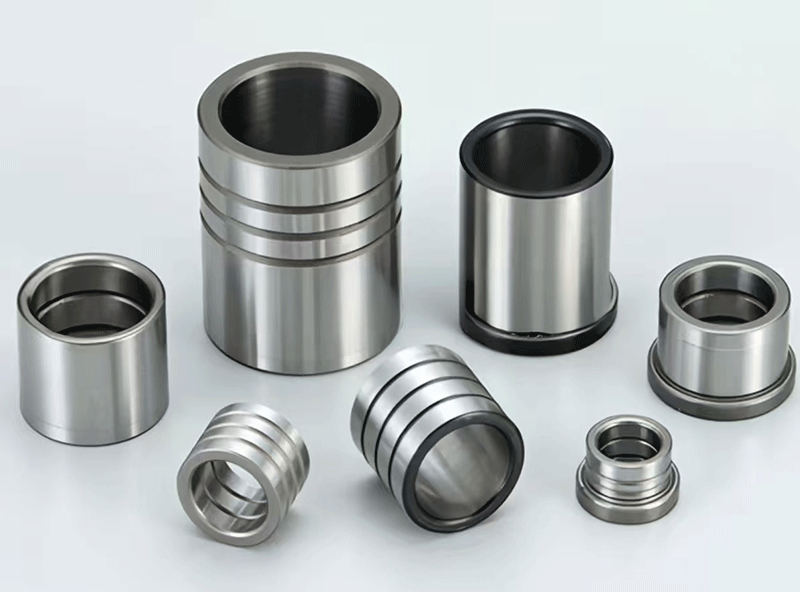
Rare alloy materials such as niobium-tungsten, tungsten, molybdenum, rhenium, magnesium, titanium, and zirconium
Introduction to Process:
The material undergoes rapid hardening. When cutting rare alloys, the surface of the material hardens rapidly, causing a significant increase in tool load and resulting in wear that is more than five times that of stainless steel.
2. Low thermal conductivity. The cutting heat from rare alloys is difficult to dissipate, which may lead to tool bonding/breakage and deformation of the workpiece.
3. High chemical reactivity. It is prone to oxidation/hydrogen absorption/nitrogen absorption at high temperatures, and requires vacuum/insulating atmosphere protection, thereby increasing the complexity of the process.
4. Low-temperature brittleness, with fewer slip systems in the body-centered cubic structure, dislocations are prone to being blocked, and cold processing is likely to cause cracking or edge spalling.










Malaysia Contact Number:+60168069060
Indonesia Contact Number:+628122227117
TaiHang Technology (Tianjin) Co., Ltd. A Riphts : Reserved All rights reserved 2025-2026